


Introduction: Why Santo Stefano is Bologna’s most authentic neighborhood
Santo Stefano is more than a neighborhood — it’s a vibe. Nestled in Bologna’s historic center, just steps from the famous Due Torri and Piazza Maggiore, the Santo Stefano quarter keeps an almost timeless atmosphere where religious history, medieval alleys and independent local shops meet to offer a truly Bolognese experience. Wandering here means willingly getting lost in peaceful cloisters, intimate courtyards, centuries-old arcades, and above all in the unique sequence of churches that make up the Complesso di Santo Stefano — often called the « Sette Chiese » (the Seven Churches). Every stone seems to whisper stories, and every square invites you to linger over a long coffee.
Contenu de l'article
This detailed guide is designed to help you explore Santo Stefano thoroughly: where to go inside, what to see, how much it costs, opening hours to expect, and practical tips to get the most out of the neighborhood like a local. You’ll find precise descriptions of the main monuments, exact addresses, practical information on hours and prices, plus suggested walking routes, food stops and small artisan shops not to miss. The aim is to make you self-sufficient on the ground — whether you have half a day or plan to return several times to soak up the neighborhood’s changing mood by hour and weather.
Beyond the monuments, Santo Stefano is a perfect place to watch daily Bolognese life: students threading the arcades, retirees chatting on benches, flower sellers outside church doors, and restaurateurs chalking up the day’s specials. If you love photography, the wealth of textures — tiled roofs, mosaics, marble, weathered wood — gives you beautiful compositions at any hour. If history is your thing, the concentration of religious buildings and cloisters is an open book on medieval Christianity and the Baroque reinterpretations of later centuries.
Finally, this guide isn’t just descriptive: it includes local tips to avoid queues, pick the best café, understand church visiting etiquette, and even recommendations for buying quality handmade souvenirs. Whether you’re passing through Bologna or planning to immerse yourself for several days, Santo Stefano rewards attention and slowness. Pack comfortable shoes, your camera and your curiosity — we’re off to discover one of Bologna’s most authentic and endearing quarters.
The Complesso di Santo Stefano (The Seven Churches): route, history and practical info
At the heart of the neighborhood sits the Complesso di Santo Stefano, nicknamed the Sette Chiese. It’s a unique cluster of churches and cloisters layered together — the product of architectural evolution from the early Middle Ages through the 17th century. The main entrance is at Piazza Santo Stefano, 6, 40125 Bologna BO, Italy. This religious complex is the neighborhood’s main attraction and deserves a slow, contemplative visit.
Hours and prices: the complex is usually open daily. Indicative hours: 09:00 – 12:30 and 15:00 – 19:00 (times may vary with seasons and religious services). Entry is often symbolic: recommended donation €2–5 for access to the full route; paid guided tours can be organized by the local tourist office (around €5–10 per person for a group, sometimes more for a private guide). Check the official site or Bologna’s tourist office (I.A.T.) for precise hours and any exceptional closures.
 Click here to book a private Santo Stefano tour with tasting

Inside, don’t miss: the Chiesa del Crocifisso with its intimate atmosphere, the Chiesa del Santo Sepolcro whose architecture evokes Jerusalem, the evocative Cloister del Calvario and the Chiesa dei Santi Vitale e Agricola. Each space offers different decorative elements: restored medieval frescoes, Baroque chapels, Romanesque columns and small dimly lit chapels. Audioguides or local guides point out iconographic details that a hurried visitor might miss.
Practical tips: respect service times (masses and ceremonies can temporarily close some chapels). Dress modestly to enter churches (shoulders covered, no very short shorts). If you want photos without crowds, aim for early morning opening (09:00–10:30) or the last hour before closing. For a fuller context, combine the Complesso di Santo Stefano with a stroll along Via Santo Stefano and Piazza Santo Stefano to see how the sacred space fits into urban life.
Walks, squares and arcades: the neighborhood’s everyday soul
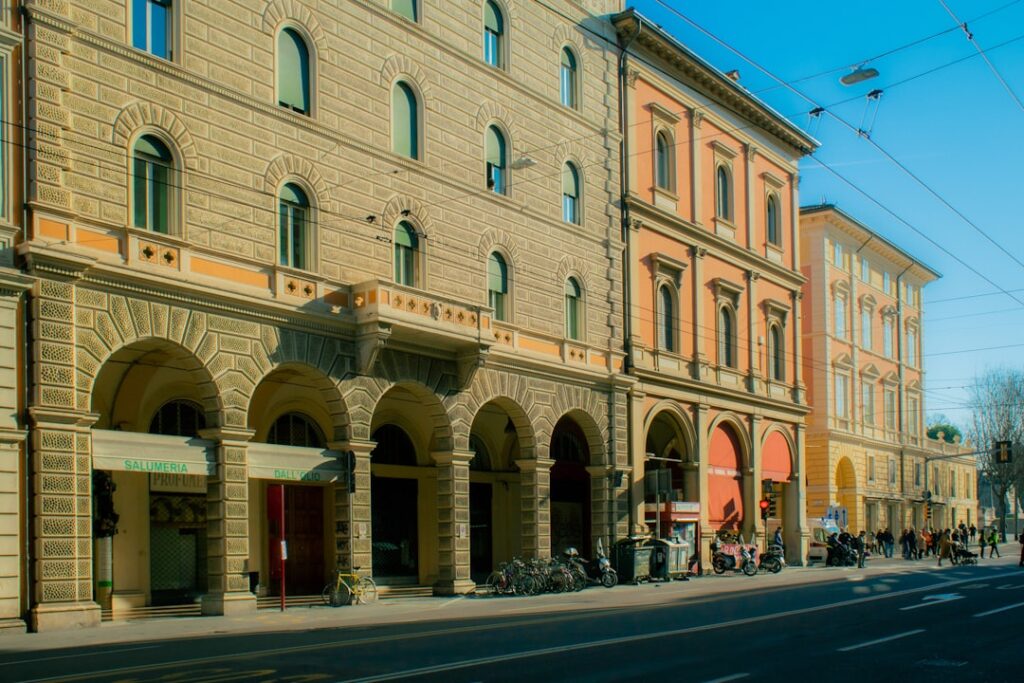
Santo Stefano is not just a group of historic buildings; it’s a network of streets and squares that breathe Bologna’s daily life. Start your walk at Piazza Santo Stefano (the neighborhood’s hub), then head down Via Santo Stefano, a shopping street lined with arcades leading into the historic core. Notable address for strollers: Via Santo Stefano, 11–30, 40125 Bologna BO (the central stretch lined with shops and cafés).
Click here to book a guided food walking tour with a local

The ideal stroll: start from Piazza Maggiore (about a 5-minute walk), cross Via degli Orefici and enter Via Santo Stefano. Stop along the way to check out small botteghe (artisan workshops) and independent bookshops. Some traditional shops still sell local specialties like Mortadella from Bologna, fresh handmade pasta (tortellini), and the famous « crescentina » (fried or stuffed flatbread) — a tasty street snack for under €5–7.
Squares and benches: while walking, look for small squares like Piazza del Leone and Piazzetta dei Celestini (informal but very central spots); they’re great places to watch neighborhood life. The arcades often have benches and cafés where you can admire brick façades and old signage. If you visit in summer, favor early morning or early evening to avoid heat and crowds.
Practical: arcades are perfect for shelter from rain or sun — a notable Bologna advantage. Pavements under the arcades are generally pushchair- and wheelchair-friendly, though watch for uneven thresholds at some entrances. Need water? Look for public « fontanelle » or ask in a café politely — many will refill a bottle for free. For photographers, the golden hour brings warm tones to the red and ochre façades.
Where to eat and drink: cafés, trattorie and local specialties
Santo Stefano is full of small spots to taste Bologna’s cuisine. Family-run trattorie and wine bars sit next to artisanal gelaterie and food markets. Here are a few recommended places, with addresses, price ranges and ordering tips.
- Trattoria del Rosso (example of a traditional trattoria) — sample address: Via Santo Stefano, 22, 40125 Bologna BO. Main dishes: tagliatelle al ragù (€11–13), lasagne verdi (€10–12). Hours: 12:00–14:30 and 19:00–22:30. Reservations recommended for evenings, especially on weekends.
- Osteria Bottega (wine bar and cicchetti) — sample address: Via Santo Stefano, 18, 40125 Bologna BO. Charcuterie boards to share (€8–15), glass of Lambrusco (€3–5). Hours: 11:00–23:30. Great for an aperitivo before dinner.
- Gelateria Gianni (artisan gelato) — sample address: Piazza Santo Stefano, 3, 40125 Bologna BO. Price: single scoop €2–3, double €4–5. Hours: 10:00–23:00 in high season.
Click here to learn to make gelato with a professional
Specialties to try:
– Tagliatelle al ragù (the local take on « Bolognese »),
– Tortellini in brodo (tortellini in clear broth),
– Crescentine con prosciutto (fried or flat bread filled with cured meats),
– Mortadella di Bologna thinly sliced.
Expect to pay around €12–18 per person for a full meal in a standard trattoria, plus drinks. For a budget option, choose a focacceria or small bistro where a pasta dish + drink can cost €8–12.
Local tips: eat early to enjoy generous portions and avoid queues. Italian meal times are often later than in France: lunch 12:30–14:30, dinner 19:30–22:30. If you’re in a group, ask for a « tavolata » and try several antipasti to share — it’s convivial and often more economical. For coffee, order at the bar (« al banco ») to pay less than sitting down. If you have dietary needs (vegetarian, gluten-free), mention it in Italian (« Sono vegetariano/a » or « Senza glutine ») — many places offer alternatives.
Museums, galleries and cultural spots nearby
Beyond the churches, Santo Stefano is close to several interesting cultural sites. If you want to deepen your cultural visit, here are a few places to include in your itinerary with practical info.
- Palazzo d’Accursio (Museo Morandi and municipal offices) — Piazza Maggiore, 6, 40124 Bologna BO. Hours: vary with exhibitions; generally 09:00–19:00. Temporary exhibition prices: €4–8.
- Archiginnasio di Bologna — Piazza Galvani, 1, 40124 Bologna BO. Historic site of the old university, featuring the Teatro Anatomico. Hours: 09:00–19:00. Fee: about €3–5 for the museum and anatomical theatre.
- Museo della Storia di Bologna (Complesso di Palazzo Pepoli) — Via Castiglione, 8, 40124 Bologna BO. Hours: 09:00–18:00, closed Monday; prices vary €5–10.
While some of these sites aren’t strictly inside Santo Stefano, they’re a short walk away and make a coherent cultural route. For example, combine a morning at the Complesso di Santo Stefano with a visit to the Archiginnasio to understand the importance of education and medicine in Bologna, then finish at the Museo della Storia for a broad overview of the city’s urban development.
Ticketing tip: save time by buying combined or online tickets when available, and favor weekday mornings to avoid crowds. If you’re traveling with family, check reduced rates for youth and seniors. Many of these museums also offer audioguides in French, English and Italian.
Practical tips to visit Santo Stefano like a local
Feeling like a local in Santo Stefano comes down to a few practical habits: plan your day, avoid tourist traps and respect local customs. Here are concrete, actionable tips to make the most of your visit.
- Getting around: walk whenever possible. The neighborhood is compact and streets are mainly paved or cobbled. Comfortable shoes recommended.
- Accessibility: many entrances have historic thresholds; arcades are generally accessible, but some chapels may have steps. If you have specific needs, contact Bologna’s tourist office for accessible routes.
- Religious hours: check service times (Sunday masses, weddings) as they can restrict access to some churches. Information is often posted at entrances or available at ticket desks.
- Safety: Santo Stefano is a safe neighborhood, but as in any tourist area, keep an eye on your belongings, especially in crowded streets and cafés.
- Money: many places accept cards, but some small shops prefer cash. Carry €20–50 in cash for small purchases or to leave a small donation in churches.
- Language: Italian is dominant, but museum staff and many restaurants speak English. A few polite phrases: « Buongiorno », « Per favore », « Grazie ».
- Best time to visit: spring and late summer (May–June and September) offer pleasant temperatures and less rain. In autumn, colors and light are beautiful for photography.
Click here to book a guided e-bike tour with aperitivo

Finally, strike up conversations with shopkeepers: locals are often proud of their neighborhood and love sharing anecdotes about its history, the best trattorie, or the little bookshop where you can find rare editions. Those exchanges are often the best way to discover gems off the usual routes.
Conclusion: Take Santo Stefano home with you — souvenirs, routes and final tips
Santo Stefano is an invitation to slow down and observe. Through its churches, arcades, cafés and small squares, this neighborhood concentrates the essence of Bologna: warmth, history, art and gastronomy. By planning your visit around monument hours and picking a few culinary stops, you’ll leave not only with photos but with vivid impressions and lasting taste memories.
For physical souvenirs, favor small artisan shops on Via Santo Stefano and the nearby lanes: booklets on local history, artisanal preserves (tapernades and condiments), or a pack of vacuum-sealed fresh pasta. Prices vary: a small book or food item typically costs between €5 and €20. For higher-quality crafts (ceramics, textiles), expect to pay €30–80 depending on the piece.
Suggested half-day itinerary:
– 09:00 Arrive at Piazza Santo Stefano and visit the Complesso di Santo Stefano (1h30),
– 10:45 Stroll along Via Santo Stefano and enjoy a terrace coffee (30–45 min),
– 11:30 Browse small shops and stop at a gelateria for a tasting (15–20 min),
– 12:00 Lunch at a local trattoria or head to nearby sites like the Archiginnasio.
This route lets you enjoy the neighborhood without rushing and feel the changing atmosphere throughout the day.

Final tips: note opening hours and stay flexible — churches and some sites may change hours for religious holidays or events. Bring a reusable water bottle, especially in summer, and a notebook to jot down addresses and dishes you loved. And leave time to come back: an afternoon can cover the essentials, but repeated walks at different times of day really reveal Santo Stefano’s soul.