


Introduction — Diving into the micro-world of Santo Stefano in Bologna
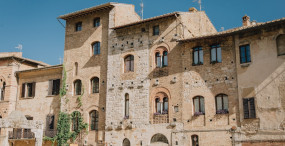
The Santo Stefano neighborhood in Bologna is a historic jewel tucked between the porticoes and medieval alleys of the old town. Quieter than the nearby Piazza Maggiore, this pocket neighborhood hides a string of little treasures: ancient churches and silent cloisters, private courtyards and workshops where artisans keep centuries-old skills alive. Strolling through Santo Stefano means slowing your pace to notice architectural details, tucked-away mosaics, secret gardens and family-run shops that tell Bologna’s long, layered story.
Contenu de l'article
In this piece I’ve picked 12 hidden gems to visit in and around Piazza Santo Stefano — each entry includes the exact address, opening times and practical prices, plus local tips to make the most of your visit. Whether you’re a photographer hunting intimate compositions, a fan of religious history, a curious foodie or a wanderer who loves Mediterranean atmosphere, these spots offer sensory experiences and fresh ways to understand the city.
The idea isn’t just to list monuments, but to invite an immersive exploration: how to slip discreetly into a cloister, when to come to avoid the crowds, which café serves a proper espresso after a visit, or where to find an unusual view over Bologna’s red roofs. You’ll also find practical info: prices in euros, up-to-date opening hours, precise addresses for your GPS, and small local pointers (public toilets, bus stops, photography restrictions or dress requirements for sacred sites).
For these outings, bring sturdy shoes — the medieval alleys are often cobbled and uneven — and a paper guide or an offline app, since mobile coverage can be patchy in some corners. Also keep in mind many of these treasures are modest and deserve respect: quiet in churches, permission for photography in some museums, and small donations to support maintenance. Ready to explore? Let’s discover the 12 hidden gems of Santo Stefano.
1. Basilica di Santo Stefano (Complesso delle Sette Chiese) — Piazza Santo Stefano, 40125 Bologna
The Basilica di Santo Stefano, often called il Complesso delle Sette Chiese, is the historical heart of the neighborhood. This religious complex consists of several interlinked churches forming a kind of sacred labyrinth with origins dating back to Lombard and medieval times. The official address is Piazza Santo Stefano, 40125 Bologna, and the complex is easy to spot from Via Indipendenza or Piazza Maggiore.
Opening times: usually open daily from 7:30 to 12:30 and from 15:30 to 19:00 — note variations for services and public holidays. Entrance fee: access to the basilica is free, though voluntary donations are requested for conservation; some interior chapels or guided visits may cost between €3 and €6.
Immersive description: step through the main portico and you’ll immediately feel the layering of spaces: a small courtyard, old chapels, an intimate cloister and the main church with its sober vaults. Natural light filtering through high windows and monastic cells creates a contemplative atmosphere. Don’t miss the Chiesa del Santo Sepolcro and its ancient stones that evoke medieval Jerusalem.
Practical tips: arrive early for soft light and near-monastic calm; stand facing the main altar to study the frescoes and carved details; respect services and dress modestly if entering active chapels. For a deeper visit, book a guided tour through Bologna’s Ufficio Accoglienza Turistica (often available in English and Italian).
 Click here to book a private Santo Stefano tour with tasting

2. Chiostro del Complesso di Santo Stefano — Piazza Santo Stefano, 2, 40125 Bologna
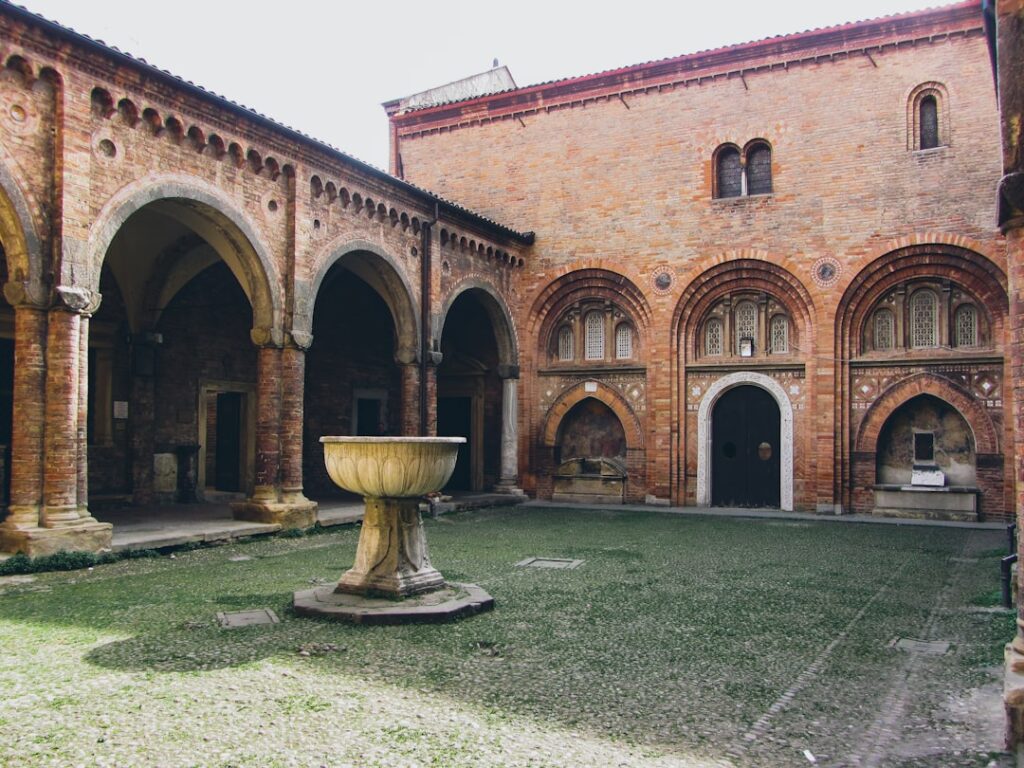
The main cloister of the Complesso di Santo Stefano, located at Piazza Santo Stefano 2, is a peaceful refuge where the city fades behind ancient arches and columns. Time seems to stretch here: the worn bases of columns, birdsong, and the smell of old wood and damp stone. Access is often through a small side entrance and may be limited during services.
Opening times: generally open to visitors from 9:00 to 12:30 and 15:00 to 18:00; closures can happen during religious events. Price: free to enter the cloister; guided group tours cost around €5–8 per person.
Detailed description: the cloister features double rows of arches, finely carved capitals and a central fountain often ringed with moss in spring. The walls show traces of faded frescoes and memorial plaques. The light in late afternoon is especially photogenic as it grazes the walls and creates strong shadow patterns. The cloister sometimes hosts temporary sacred art exhibitions or chamber music concerts.
Practical tips: if you want to photograph without disturbing anyone, bring a 35–50mm lens to capture both the architecture and the details; observe silence and avoid flash in enclosed spaces. In summer, carry a small water bottle — the shade can still feel heavy. Check the small info panel near the entrance to learn about the history of the capitals and sculptures.

3. Museo del Tesoro di Santo Stefano — Piazza Santo Stefano, 5, 40125 Bologna
The Museo del Tesoro di Santo Stefano (Treasure Museum) is a small museum attached to the complex that’s often skipped on quick tours. Address: Piazza Santo Stefano, 5, 40125 Bologna. It houses liturgical objects, relics, illuminated manuscripts and pieces of goldsmithing from the various churches in the complex.
Opening times: open Tuesday to Sunday, typically 10:00–13:00 and 15:30–18:00. Closed on Mondays. Price: full ticket around €4; reduced rates (students, seniors) €2–3; sometimes free for under-18s. Themed guided tours may be offered for €6–10.
Immersive description: step through the museum door and you’ll find displays and alcoves where items are carefully arranged: embroidered chasubles, silver chalices, ornate reliquaries and illuminated pages. The museum is compact but packed with detail — look for Latin inscriptions, metal chiseling and traces of polychromy on some reliquaries. Staff often explain the provenance of pieces and restoration techniques used.
Practical tips: take time to read the labels in Italian and English; if you love goldsmithing, ask staff if close-up views of certain items are possible (sometimes allowed under supervision). Be aware hours can change for religious ceremonies. The museum is air-conditioned and a 45–60 minute visit is ideal to appreciate the collection at a relaxed pace.
4. Oratorio di Santa Maria della Vita (nearby) — Via Clavature, 12, 40124 Bologna
Although just outside the strict perimeter of Santo Stefano, the Oratorio di Santa Maria della Vita deserves a mention for its proximity and its extraordinary, monumental sculpture group the Compianto sul Cristo morto by Niccolò dell’Arca. Address: Via Clavature, 12, 40124 Bologna. The oratory is a fine example of the artistic riches of Bologna’s historic center.
Opening times: open Tuesday to Sunday, 9:00–17:30; closed on Mondays. Price: entrance usually around €3–5; reductions possible. Audio guides may be available for an extra €2–3.
Detailed description: inside, the dramatic staging of the sculptural group — tormented, expressive faces and agitated drapery — packs an emotional punch. The spaces are small but the visual impact is huge; it’s a place where theatrical sculpture from the late Middle Ages and Renaissance really comes alive. The building also has a lovely vaulted interior room and excellent acoustics.
Practical tips: pair this visit with a coffee break nearby (Via Clavature has several small cafés); take time to watch how natural light plays on the sculptures at different times. In low season, check for special openings during religious holidays.
5. Corte Isolani and Secret Passages — Via Santo Stefano, 1, 40125 Bologna
Corte Isolani is a covered passage and inner courtyard in the heart of Santo Stefano that links Via Ugo Bassi to Via Santo Stefano. Address: Via Santo Stefano, 1, 40125 Bologna. Although it’s become more touristy, the courtyard still holds quiet corners, artisans’ shops and small restaurants tucked behind old arches.
Opening times: the courtyard is freely accessible 24/7, but shops and cafés usually open between 9:00 and 19:30; some restaurants stay open until midnight. Price: free to roam; purchases depend on menus (coffee €1–2.50, meals €12–30 depending on the place).
Immersive description: walk through the passage and you’ll be struck by the contrast between the bustling street and the calm interior: painted facades, finely worked arcades, climbing vines on balconies. Several designers’ studios, independent bookshops and ceramics boutiques are tucked away here. The courtyard is especially nice in soft light, and in summer evenings many places set up outdoor tables creating a friendly, almost provincial atmosphere.
Practical tips: visit in the morning to avoid crowds; for artisan gifts, check stationery and ceramics workshops. The courtyard connects to Via Ugo Bassi — handy if you’re coming from the Central Station (a 5–10 minute walk).

6. Chiesa di San Procolo — Via S. Procolo, 4, 40126 Bologna
Chiesa di San Procolo is a Romanesque church often overshadowed by more famous sites, but it hides ancient frescoes and a notable altarpiece. Address: Via S. Procolo, 4, 40126 Bologna. Its discreet façade is typical of neighborhood churches, but the interior offers several artistic surprises.
Opening times: generally open from 9:00 to 12:30 and 15:00 to 18:00; may be closed on Wednesdays. Price: free entry with an optional donation (€1–3). Some areas may only be accessible during scheduled guided visits.
Detailed description: the church features barrel vaults, richly decorated side chapels and fragments of medieval frescoes worth examining closely. The atmosphere is intimate; light filters through small windows, highlighting the faded colours of the paintings. You’ll feel the close ties the place has with the local community, often gathered here for services or choral concerts.
Practical tips: check service times to avoid peak moments, and don’t hesitate to ask the sacristan for explanations about the frescoes and their restoration. Architecture buffs should look for the preserved Romanesque elements and later Baroque additions.

7. Giardino Segreto di Santo Stefano (secret garden) — access via Vicolo Ranocchi, 40125 Bologna
The Giardino Segreto di Santo Stefano is a small green oasis reached through a narrow passage (Vicolo Ranocchi) and often invisible to hurried visitors. Access address: Vicolo Ranocchi (secondary entrance), 40125 Bologna — the garden unfolds behind old walls near Piazza Santo Stefano.
Opening times: open to the public from 9:00 to 19:00 in season (spring/summer); shorter hours in winter. Price: free entry or voluntary donation (€1–2) for upkeep. The garden is sometimes reserved for private events or evening literary readings.
Immersive description: this space is a refuge for urban wildlife: bees, small birds and aromatic plants. Narrow paths, climbing roses, shaded benches and a little fountain make it feel like a cloister garden but open to all. It’s perfect for a reading break, a discreet picnic (follow the rules) or a quiet nap away from the city noise.
Practical tips: bring a small mat if you plan to sit on the grass, but don’t leave litter; respect opening hours so you don’t interrupt scheduled activities (yoga classes or floral workshops). The garden is especially lovely early morning or late afternoon when the light is gentle and temperatures are pleasant.
8. Libreria Antiquaria e Rara — Via Santo Stefano, 17, 40125 Bologna
This antiquarian and rare books shop at Via Santo Stefano 17 is a haven for bibliophiles. You’ll find editions from the 16th to the 19th centuries, old maps of Emilia-Romagna and local manuscripts. The atmosphere is like a cabinet of curiosities where each shelf tells a story.
Opening times: Tuesday to Saturday, 10:00–13:00 and 15:30–19:00; closed Sundays and Mondays. Price: free entry; books priced according to rarity (from €10 for reprints to several hundred euros for rare editions). Researchers can arrange consultation by appointment.
Immersive description: push open the door and you’re greeted by the smell of old paper and the clack of bindings. Staff are often passionate and bilingual, eager to share anecdotes and provenance notes. The shop occasionally hosts private readings, author talks and small literary salons in an adjoining room.
Practical tips: if you’re hunting for an old guide to Bologna or a historic map, tell the bookseller your theme — they’ll search the reserves. For travelers, it’s a superb place to buy an original souvenir; researchers should contact the shop ahead to reserve a consultation slot.
9. Bottega dei Mestieri — Via Santo Stefano, 22, 40125 Bologna
Bottega dei Mestieri is a traditional craft workshop where leatherwork, bookbinding and small marquetry are practiced. Address: Via Santo Stefano, 22, 40125 Bologna. You can watch artisans at work and sometimes take short introductory workshops.
Opening times: open Tuesday to Saturday, 10:00–13:00 and 15:00–19:00; evening workshops by reservation. Price: free to visit; introductory workshops €25–60 depending on length (1–3 hours); handcrafted items €15 (small goods) to €150 (collector pieces).
Immersive description: the workshop is a warm space filled with shavings, old tools and the scent of glue and leather. Craftspeople proudly demonstrate stitching, gilding and finishing techniques: watching these precise gestures in silence is almost meditative. Visitors can buy handbound notebooks, belts or commission a small personalized item.
Practical tips: book workshops in advance, especially for afternoon slots; if you buy leather goods ask for care instructions. Photographers should request permission before taking close-up shots of artisans at work.

10. Torri e Vedute: Panorama Rooftop (private terrace view) — Via Santo Stefano rooftops access
Views over Bologna are often associated with the Asinelli and Garisenda towers, but there are small private terraces around Santo Stefano that offer more intimate panoramas. Access: private terraces are reached through some boutique hotels and restaurants around Via Santo Stefano (ask reception or book a table to reach the terrace).
Opening times: vary by establishment (often 10:00 until midnight for restaurants/hotels). Price: free for guests; otherwise a minimum spend (around €8–20 for a drink). Some places run panoramic visits by reservation (€10–15).
Immersive description: from these terraces you’ll see terracotta roofs, nearby bell towers and the hills on the horizon. Sunset is the magic hour: the city turns warm and towers silhouette against the sky. These viewpoints offer a quieter, more personal perspective than the big tourist towers — great for photos without the crowds.
Practical tips: book a table for late afternoon to secure terrace access; bring a modest zoom (50–100mm) to capture roof and chimney details. Check the weather — terraces close in rain or strong wind.

11. Antico Forno e Gastronomia Locale — Via Santo Stefano, 10, 40125 Bologna
Nothing captures Bolognese life better than the smells from a traditional oven. This old bakery and small deli at Via Santo Stefano 10 offers local specialties: tigelle, crescentine, artisanal mortadella and fresh pasta. It’s the perfect place to taste classic Bolognese fare made the old-fashioned way.
Opening times: open daily except Sunday mornings, usually 8:00–13:00 and 16:00–20:00. Price: coffees €1–2, bruschette and small plates €3–7, charcuterie boards €8–18 depending on size.
Immersive description: step inside and you’ll be welcomed by a display of rustic breads and brown pastries. The smell of the oven, the clatter of plates and local chatter create a convivial vibe. Staff are happy to advise what to take for a picnic in the Giardino Segreto or on Piazza Santo Stefano.
Practical tips: try the local crescentina (fried/pan-fried flatbread) with salumi and cheese; buy a small board to share as a light lunch. Come before noon for warm breads; in the evening some products may be sold out.
Click here to taste 3 pastas, unlimited tiramisu and wine
12. Fresco Restoration Studio — Via Santo Stefano conservation studio
The final treasure is a discreet institution: a fresco and artwork restoration studio located in a building adjacent to the Santo Stefano complex. Access by appointment: Via Santo Stefano (internal studio, 40125 Bologna) — the workshop only receives visitors by appointment to protect works and the workspace.
Opening times: visits by appointment only, usually morning or late-afternoon slots; prior contact essential. Price: technical visits for students/researchers €10–20; public educational guided visits €5–12.
Immersive description: the studio is a concentration of meticulous work: magnifiers, fine brushes, microscopes, bottles of solvents and palettes of reconstructed pigments. Conservators explain methods (cleaning, consolidation, chromatic retouching) and show striking before-and-after examples. It’s a rare chance to grasp the fragility of Bolognese frescoes and the expertise required to preserve them.
Practical tips: book well in advance, especially in high season; prepare questions on techniques and pigment chemistry if you’re curious. Visits are usually small-group and ideal for art-history lovers and conservation students.
Conclusion — How to make the most of your Santo Stefano exploration
Visiting the 12 hidden gems of Santo Stefano is a multi-sensory journey: architecture, sacred art, craftsmanship, gastronomy and secret gardens make an itinerary that reveals an intimate, lesser-known Bologna. To make the most of your exploration, I suggest spreading these visits over two days: spend the first morning at the Basilica di Santo Stefano, the chiostro and the Museo del Tesoro, then the afternoon in inner courtyards like Corte Isolani, the antiquarian bookshop and the Bottega dei Mestieri. The second day is great for breathing: the secret garden in the morning, the oratory and the restoration studio in the afternoon, and an aperitif on a private terrace to end the day.
Some final practical tips: always double-check opening times before heading out (churches and small museums often close for services or conservation work), favor walking — distances are short and alleys are best discovered on foot — and carry some cash (many places ask for donations or don’t accept cards for small purchases). If you’re traveling in a group, consider booking guided tours for certain spots (museum, restoration studio, oratory) for informed commentary and access to areas otherwise closed to the public.
Finally, leave room for the unexpected: Santo Stefano is a neighborhood where you might stumble upon an early-music concert in a chapel, a temporary exhibition in a cloister, or an artisan eager to demonstrate a centuries-old technique. Respect the places, the community and the opening hours: these treasures survive thanks to the care of locals and small contributions from visitors. Enjoy your trip and the discovery of this secret Bologna — rich in history, flavors and quiet beauty.
Click here to book a private walking tour in Bologna