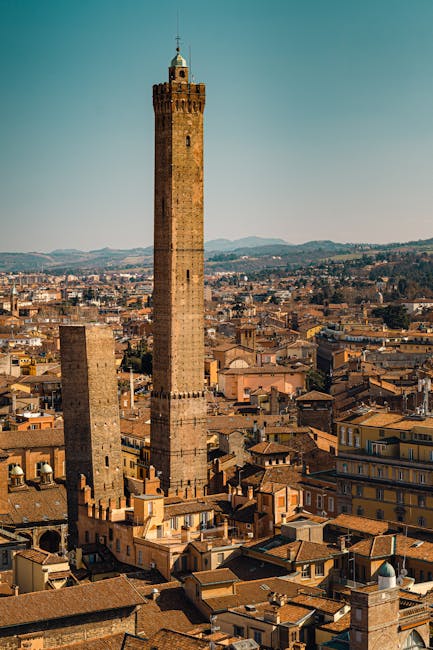



Introduction: Let the Towers of Bologna Lead the Way
Bologna is a city where history rises up vertically. Strolling beneath its iconic porticoes, you discover an urban skyline dotted with medieval towers — remnants of a time when merchant and noble families competed in height to flaunt their power. This walking route invites you to follow those landmarks, explore their schools, observatories and viewpoints, and understand why Bologna is nicknamed “La Dotta, La Grassa e La Rossa” — the Learned, the Plump and the Red — for its ancient university, generous cuisine and terracotta rooftops.
Contenu de l'article
More than mere landmarks, Bologna’s towers tell the story of the city’s social and architectural evolution. Some are open to the public and serve up breathtaking views over the hills of Emilia-Romagna; others keep their spiral staircases intact or are now private residences. This walking route bundles essential practical info: exact addresses, current prices in euros, opening hours, vivid descriptions and local tips to make the most of your visit — whether you’ve got a day to spare, a food-filled weekend or a longer stay.
We’ll begin at Piazza di Porta Ravegnana, the nerve center where the two most famous towers rise, then purposely lose ourselves in side streets to discover lesser-known but equally fascinating towers: Torre Prendiparte, Torre della Specola (the astronomical observatory), and a number of private towers visible from the street. Each stop is planned to be walkable at a relaxed pace, with tasty breaks to try Bologna classics: tagliatelle al ragù, mortadella, and a perfectly executed panna cotta to finish.
This route covers roughly 3–4 kilometers of urban walking (depending on variations) and is ideal for a half-day or a full day depending on how much time you spend inside the monuments. Opening hours and prices are listed here for planning purposes; note that some places — especially private towers — may change hours during high season or for events. Check official websites or call local tourist offices to confirm. You’ll also find practical advice on accessibility, staircase safety, and recommended photo viewpoints at sunset, nearby cafés and tips to avoid queues during peak times.
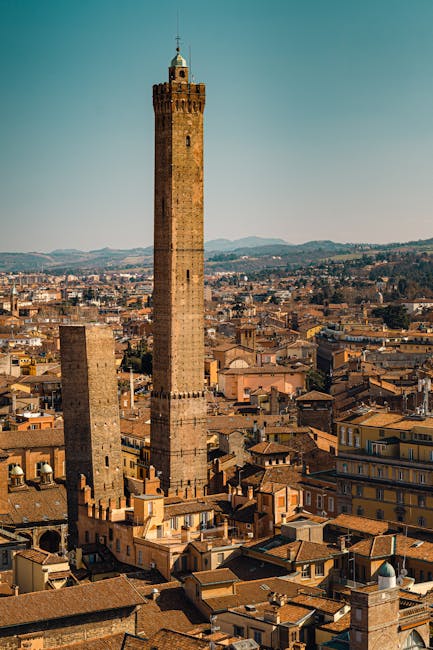
Torre degli Asinelli and Torre Garisenda — the iconic duo
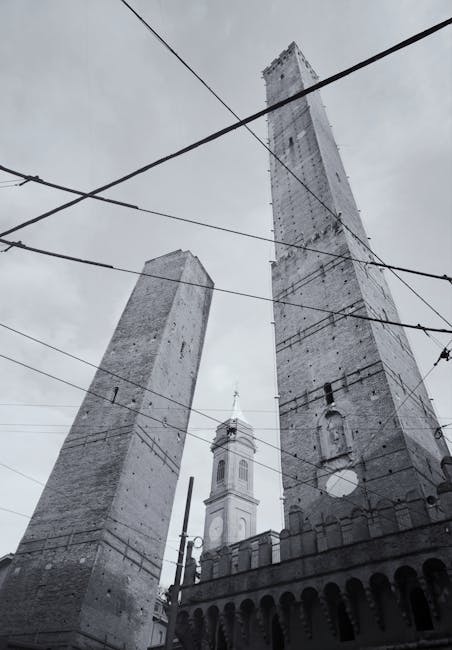
The tour starts where almost every guide does: Piazza di Porta Ravegnana, 40126 Bologna BO, Italy. Here stand the Torre degli Asinelli (the taller) and the Torre Garisenda (the more leaning). The Torre degli Asinelli, built between the 11th and 12th centuries, reaches about 97.2 meters and is open to the public via a climb of 498 steps that leads to a spectacular viewing platform. The usual access point is Piazza di Porta Ravegnana. Admission is around €6.00 per adult (reduced rates for students and seniors, often €3.00), and typical opening hours are daily 09:00–19:00 in high season (April–October) and reduced hours in low season (10:00–16:00). The climb is steep and the wooden-and-stone staircase can be narrow; it’s not recommended for those with reduced mobility or a fear of heights.
 Click here to book a walking tour with views of the Tower and the Archiginnasio
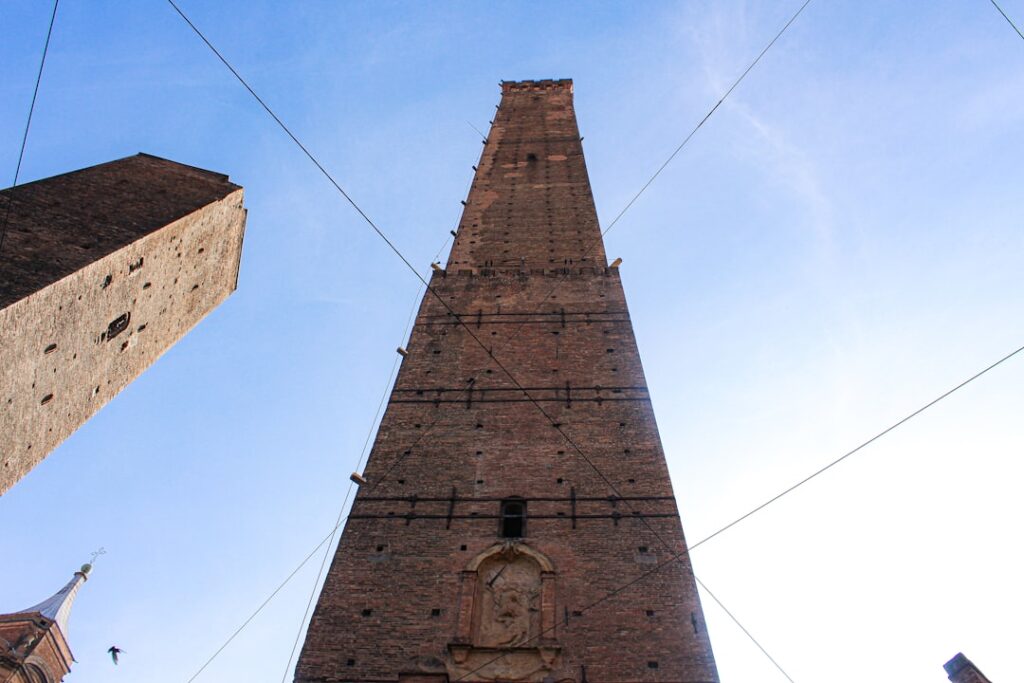
Opposite it, the Torre Garisenda is much shorter (originally about 48 meters, reduced over the centuries) but notably tilted. It is closed to the public for safety reasons, but its leaning silhouette has become one of Bologna’s visual emblems, visible from the square or Via Rizzoli. Address: Piazza di Porta Ravegnana, 40126 Bologna BO. Photographers: aim for the square at sunrise or sunset to capture warm light on the ochre tiles and dramatic shadows across medieval timberwork.
Practical tips: arrive early to avoid crowds and cut waiting time; on clear days the view from Torre degli Asinelli reaches the surrounding hills (Colli Bolognesi). Bring water, wear closed shoes and take your time on the ascent — several landings offer windows onto the city where you can pause for photos. Vendors and cafés around the square sell espresso and cornetti — perfect for a reward after descending.
- Address: Piazza di Porta Ravegnana, 40126 Bologna BO
- Price: ~€6.00 adults, ~€3.00 reduced
- Hours: Typically 09:00–19:00 (Apr–Oct), 10:00–16:00 (Nov–Mar) — check locally
- Tip: Arrive before 10:30 to avoid the queue
Torre Prendiparte — a lived-in tower turned guided visit
The Torre Prendiparte offers a different kind of experience: located at Via Montebello 8, 40121 Bologna BO, this 13th-century tower has been restored and now runs guided tours and occasional overnight stays in a guest room at the top. Inside you’ll find medieval frescoes, tight staircases and stone doorframes that tell the story of noble family life. Access is by reservation or by joining a scheduled guided tour; the standard guided-visit price is about €8.00 per person, while overnight rates vary widely by season (expect roughly €80 to €150 for a double room, breakfast included). Reception hours for visits are often in the afternoon, between 14:00 and 18:00, with specific slots at weekends.
Click here to book a private walking tour with a local
Climbing Torre Prendiparte feels like stepping into a time machine: each landing is a room, every window a lookout over roofs and turrets. The summit view is more intimate and less panoramic than Torre degli Asinelli’s, but it’s quieter and packed with architectural detail. Local guides explain medieval social hierarchy and point out restored features such as period woodwork and stone carvings.
Practical tips: book in advance, especially in high season; group sizes are limited due to narrow stairs. Wear slip-resistant shoes and avoid large bags. If you stay overnight — a rare and memorable experience — request an east-facing room for sunrise views, bring a small torch to move around at night and enjoy breakfast the Bolognese way: coffee, fresh bread and homemade jam.
- Address: Via Montebello 8, 40121 Bologna BO
- Visit price: ~€8.00
- Overnight price: ~€80–150 depending on season
- Visit hours: Generally 14:00–18:00, by reservation
Torre della Specola and the Museo di Astronomia — sky and science
The Torre della Specola is the old astronomical tower of the University of Bologna, now linked to the Museo della Specola and the scientific collections at the Palazzo Poggi. The complex is located at Via Zamboni 33, 40126 Bologna BO. The institution is a testament to Bologna’s strong scientific tradition, where old astronomical instruments sit alongside models and cabinets of curiosities. The Specola tower and museum can be visited as part of a tour of Palazzo Poggi and its scientific collections.
Click here to book a private city and university tour
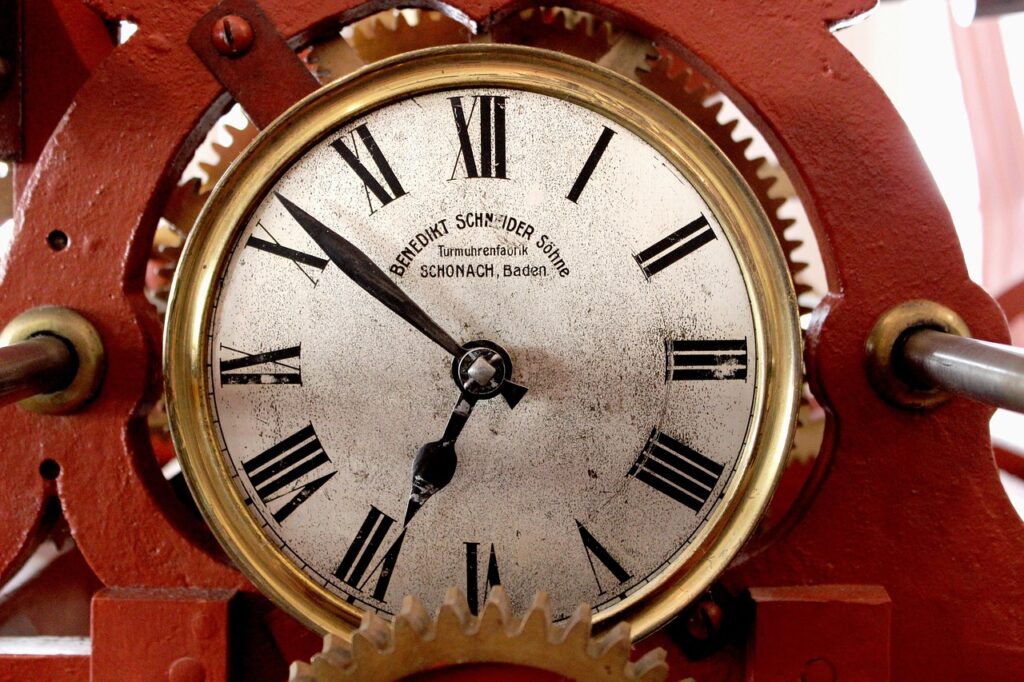
Typical prices and hours: the Museo della Specola / Palazzo Poggi often offers combined tickets around €5.00–€8.00 for entry to the collections (reduced rates for students and school groups). Hours are usually Tuesday–Sunday 09:00–18:00, closed on Monday, but it’s essential to check the tower’s specific times if you plan to climb the observatory portion, as guided visits to the tower may only be scheduled on certain days at fixed times.
The experience is twofold: the history of sky observation since the 16th century and unusual views over the university quarter and surrounding roofs. The palace rooms display globes, armillary spheres and old optical instruments, a must for lovers of the history of science. If you’re traveling with kids, the museum occasionally runs workshops and interactive activities — ask at the entrance.
Practical tips: pair this visit with a walk along Via Zamboni and its university bookshops. The neighborhood is full of student cafés and small trattorie where you can grab a panino or focaccia. For photographers, the palace windows and tower openings offer original compositions of Bologna’s roofs and bell towers.
- Address: Palazzo Poggi, Via Zamboni 33, 40126 Bologna BO
- Price: ~€5.00–€8.00
- Hours: Often 09:00–18:00 (closed Monday)
- Tip: Check guided-visit availability for Torre della Specola
Less-known towers and secret viewpoints — a backstreet route
Beyond the tourist stars, Bologna hides towers that are less visited but full of character: the Torre di Palazzo d’Accursio (near Piazza Maggiore), the Torre dei Re Enzo (integrated into Palazzo Re Enzo), and several small turrets visible from Via Santo Stefano or Via Castiglione. This chapter offers a walking circuit that highlights the best photo spots and tasty little breaks.
Click here to book a walking tour of the historic center
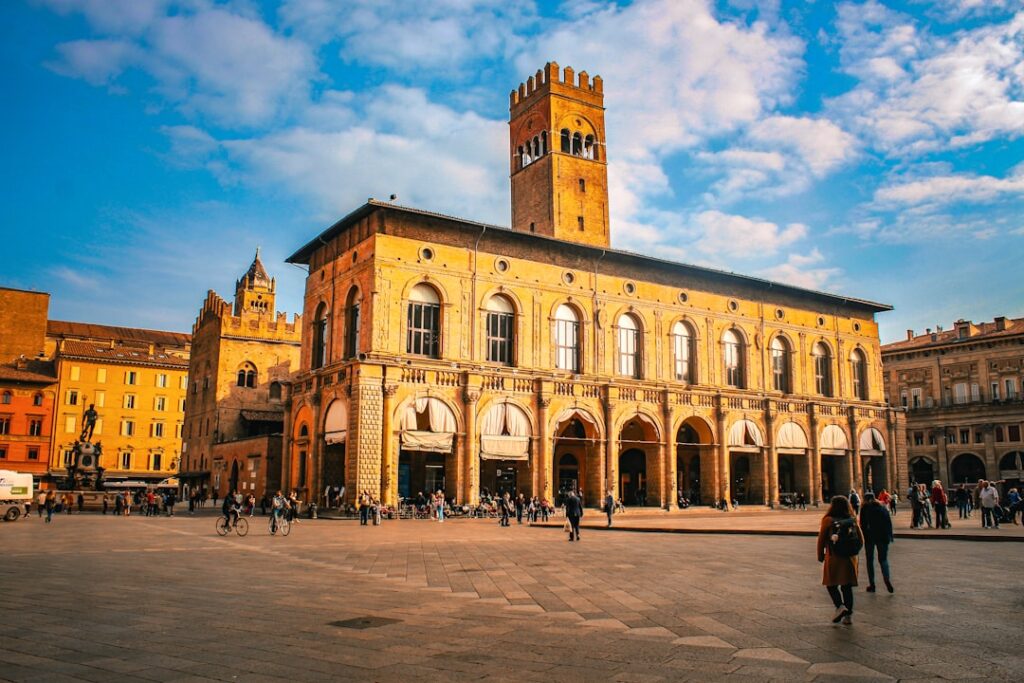
Start at Piazza Maggiore (40124 Bologna BO): the Palazzo d’Accursio (or Palazzo Comunale) has a tower and now houses the municipal historical collections. Museum admission varies but is generally around €3.00–€6.00, with typical hours 10:00–18:00. Then stroll down Via Santo Stefano and take time to explore small squares: Piazzetta San Colombano and the Seven Churches area (Santo Stefano) offer perspectives on towers and medieval façades often overlooked by standard routes.
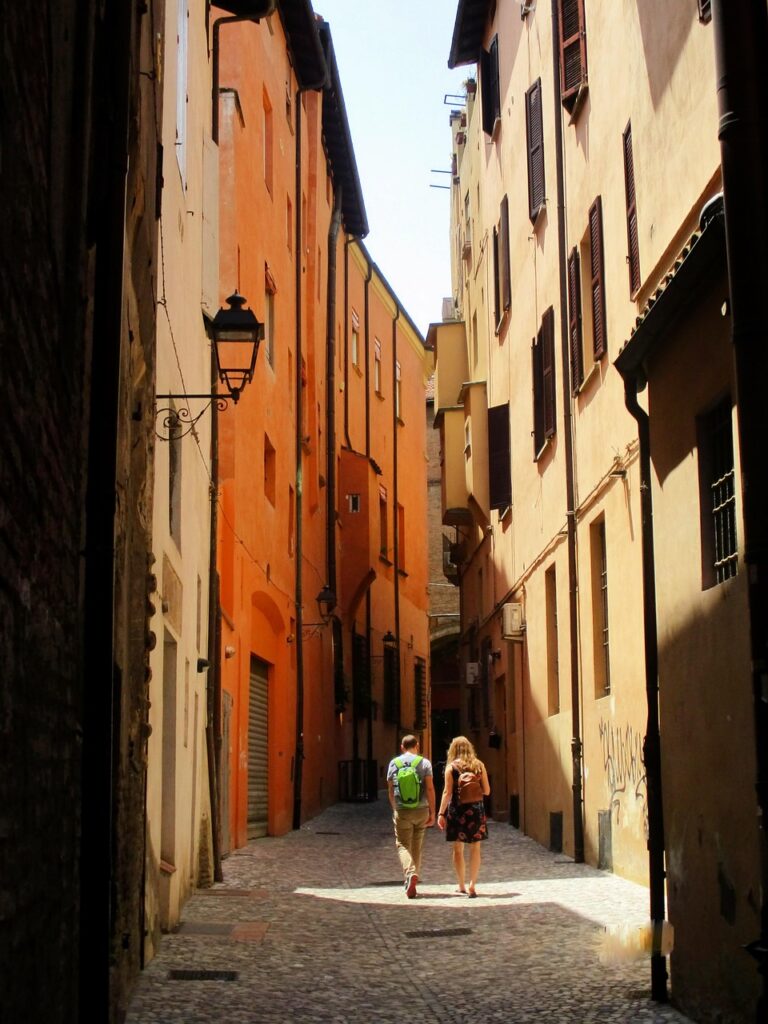
For a lesser-known but memorable view, head up to the Terrazza Caffè Zanarini (not far from Piazza Maggiore — check the café’s exact address before you go) or seek rooftop access at certain museums and hotels — several establishments allow terrace access with a purchase. Photographers will love the soft evening light that gilds terracotta walls, and the nearby alleys are full of small trattorie for a meal break.
Practical tips: respect private access — many towers are private properties or residences. For views from hotel or café terraces, the general rule is to buy something: an espresso (€1.20–€1.50) is often enough to gain terrace access. In the evening, stick to well-lit, wider alleys and enjoy night markets or stalls to sample local cheeses and cured meats.
- Key spots: Piazza Maggiore, Via Santo Stefano, Terrazza Caffè Zanarini
- Budget: variable — espresso ~€1.20–€1.50, museum entry ~€3–€6
- Tip: Check access rules for private terraces
Practical tips for an optimal walking route
A walking route of historic towers requires a bit of planning. Here are detailed recommendations to fully enjoy this stroll through Bologna, taking into account opening hours, weather, accessibility and local services.
Getting around and where to start: most towers are in the historic center — Piazza Maggiore and Piazza di Porta Ravegnana are within easy walking distance from Bologna Centrale station (about 15–20 minutes on foot) or accessible by city buses. If you start at the station, exit via Piazza Medaglie d’Oro and cross Via dell’Indipendenza to reach Piazza Maggiore. Wear comfortable shoes: old cobbles and stone steps demand stable soles.
Best times to go: early mornings (08:00–10:30) and late afternoons (17:00–19:30) offer the best light for photos and cooler temperatures in summer. In winter, plan indoor visits (museums, open towers) for the afternoon to avoid morning closures. If you want to climb Torre degli Asinelli, avoid the lunch hour when lines get longer.
Safety and accessibility: many towers have narrow staircases and are not suitable for people with reduced mobility. Parents with strollers will often need to leave the stroller at the base and use a baby carrier. People with heart conditions or severe vertigo should skip the climbs; the ascent can be physically demanding. Bring water, especially in summer, and take regular breaks.
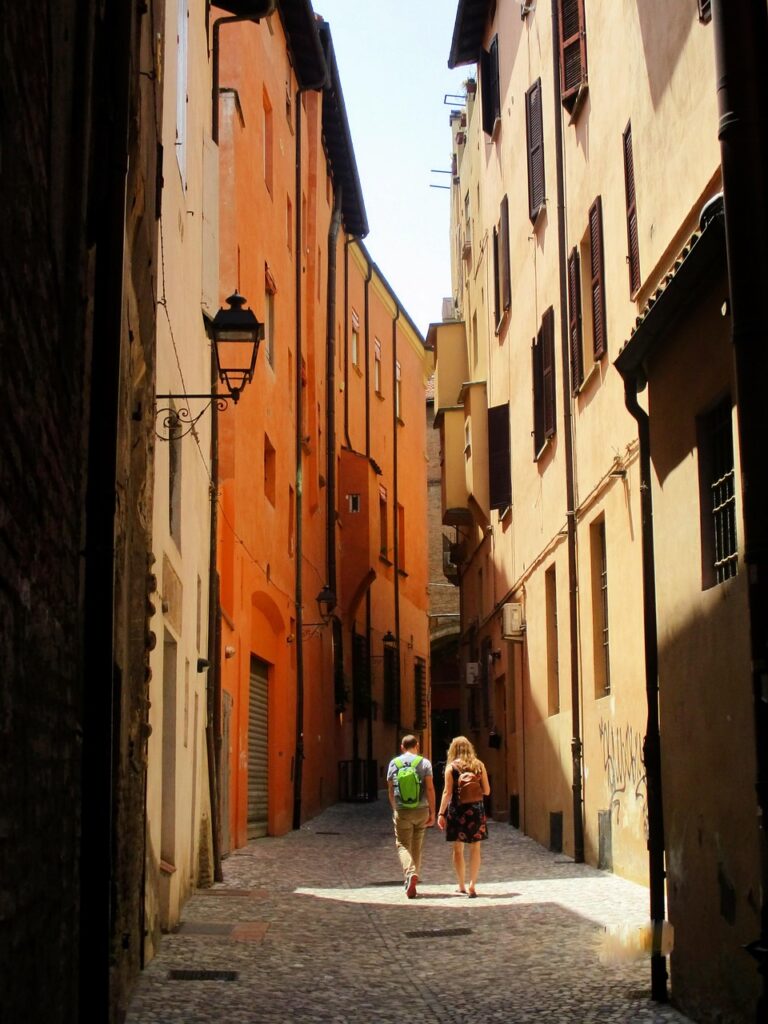
Budget and tickets: prices listed in this guide are estimates. Some towers accept cash only, so it’s wise to carry a few euros. To save time, look into combined tickets (for example, Palazzo Poggi + Museo della Specola) and local tourist passes that may include entry to certain museums and reduce overall cost.
- Shoes: closed, non-slip soles
- Hydration: reusable water bottle
- Payment: cash + card
- Booking: visiting Torre Prendiparte often requires a reservation
Conclusion: Between stone and panoramas — why this route is worth it
The walking route of Bologna’s historic towers is far more than a list of monuments: it’s an immersion into the city’s vertical memory. From the ostentatious power of Torre degli Asinelli to the domestic intimacy of Torre Prendiparte, and the scholarly curiosity of Torre della Specola, each stop reveals a different facet of medieval and modern urban life. To walk these streets is to walk through layers of history — merchants and jurists, astronomers and students, craftsmen and bourgeois families — that helped shape today’s Bologna.
Architecturally, the towers tell of family rivalry and urban defense logic; on a human level, they offer panoramas, vantage points and stories of daily life raised above the street. The pleasure of the route lies in balancing monuments open to the public with private silhouettes observed from the street: every corner, every little turret or high window invites you to imagine the city of yesteryear. For visitors, combining tower climbs where possible, gastronomic breaks in historic trattorie and visits to small museums makes for a varied and rewarding day.
Finally, remember that Bologna is a living city: opening hours can change, occasional restorations can close access, and university events can alter the vibe of the center. But that’s part of the city’s charm — history is never frozen. Before you go, check the official numbers and websites for reservations, plan your route around opening times and, above all, leave time to wander. A coffee under an arcade, a plate of tagliatelle al ragù in a Santo Stefano osteria and a final glance from a café terrace will give you a complete, tasty and visual memory of the day.
Click here to book a culinary walking tour with a local guide